1.a. Students are able to evaluate critically, reflect, and problem-solve individually as well as collaboratively.
Career Academy Expansion (LIS 6409-Introduction to Library Administration)– Currently, my library system has a limited service called Career Academy, but beyond some classes and a few dedicated computer stations, there isn’t much more available to help people reach their employment goals. My proposal takes the existing structure and expands the service to include a start to finish way to help people find jobs. This proposal includes all costs, a timeline, and uses existing resources to make a larger impact. The program shows critical evaluation of an existing program, by examining what is successful and what needs improvement, reflects on how changes could be made, and provides solutions to problems that may come up during implementation. You can see the expansion plan below.
Collection Development Policy (LIS 6511- Collection Development and Maintenance)– In this group project, we had a high level of collaboration, using several virtual meetings to talk through existing policies we located online from other library systems. Because we found that these policies were inconsistent with one another, many not including components that seemed essential or being quite vague in what was stated online, we worked together to identify a group of policies to refer to that collectively covered all areas. In this project, we had to problem-solve as a group in order to agree on a thorough but fairly straightforward policy for collection development. While we each started specific sections, we also reviewed the policy as a whole once all parts were brought together, to ensure that we had consistent messaging and tone throughout the policy. That part was fairly easy because of the collaborative work we had done at the start of the project.
Policy Evaluation (LIS 5020- Foundations of Library and Information Science)– During my first semester in this program, I participated in a group project where we examined a policy/set of rules set forth by an existing library. In the group, we collaborated on how we would improve or clarify these policies. We had ongoing discussions through comments and through emails about the problems we could see with the policy as written, and how best to improve it. We reflected on our word choices and how they would be interpreted, and worked together to solve problems we were not sure how to handle initially, to make the policy equitable to all patrons. You can read some of these comments and problem-solving in the notes. This paper is password protected so that the comments could be visible.
1.b. Students demonstrate effective communication skills.
Booktalk (LIS 5566- Multicultural Literature for Children and Young Adults) – In a short format video, I presented the book Marcus Vega Doesn’t Speak Spanish to potential readers, and added a short list of similar reads at the end of the video in case the viewer has already read it and enjoyed the book. Communication skills were demonstrated by informing viewers why they would enjoy reading this book in a way that doesn’t spoil any plot details. You can see the BookTalk video here.
Roles of Information Professionals Poster (LIS 5020- Foundations of Library and Information Science)– Using four sources of information, I designed a poster to demonstrate how Information Professionals are managers of change. You can see the poster here. Communication skills were shown in the way the material was conveyed in both words and images to succinctly share these concepts.
Challenge Response (LIS 6511- Collection Development and Maintenance)– Using the challenge policy put in place by a group that I worked with in LIS 6511, I created this challenge response. This demonstrates my ability to communicate policy and decisions clearly, taking a firm stance to enforce library policy, while acknowledging the concerns of the patron. You can see the full challenge response below.
1.c. Students participate in professional and community engagement activities in the field.
True Book Fair (Co-curricular Activity)-The True Book Fair (TBF) was a concept that I learned about during the 2020 ALA Conference which was virtual, and my library offered employees access to participate in any sessions we had interest in. Julie Stivers presented the concept of a True Book Fair in a session called Healing Reading Trauma. The basic concept is that Scholastic Book Fairs are not really “fair” because for some kids, the trauma caused by not being able to afford those books was very real. So she collected books to give away for free. I am a library liaison for a small charter school close to the library and realized that I wanted to try to duplicate this. I reached out to Julie Stivers and she answered some of my questions about it, and I decided that I wanted to collect enough books that each child could select 3 free books. I worked with the Friends of the Library bookstore, the Collection Development team, and the public to achieve my goal of gathering 750 books, which were displayed in a similar fashion to the traditional book fair, and each child was able to choose free books. It was a roaring success (even though it was challenged by a FORTIFYFL anonymous tip) and I am currently in the process of collecting more books to do it all again this school year. Please reach out if you have any questions about this program. Professional engagement was shown in my collaboration and consultation with Julie Stivers, the FOL bookstore, and the Collections Development department, as well as the school’s administration during the process. Community engagement was shown in the distribution of books to the school’s community, and while I was collecting donations, through various people and posts on social media. Below you can see a gallery of pictures including the storage of books collected, how they were displayed at the school, and photos from the days of the actual book fair.
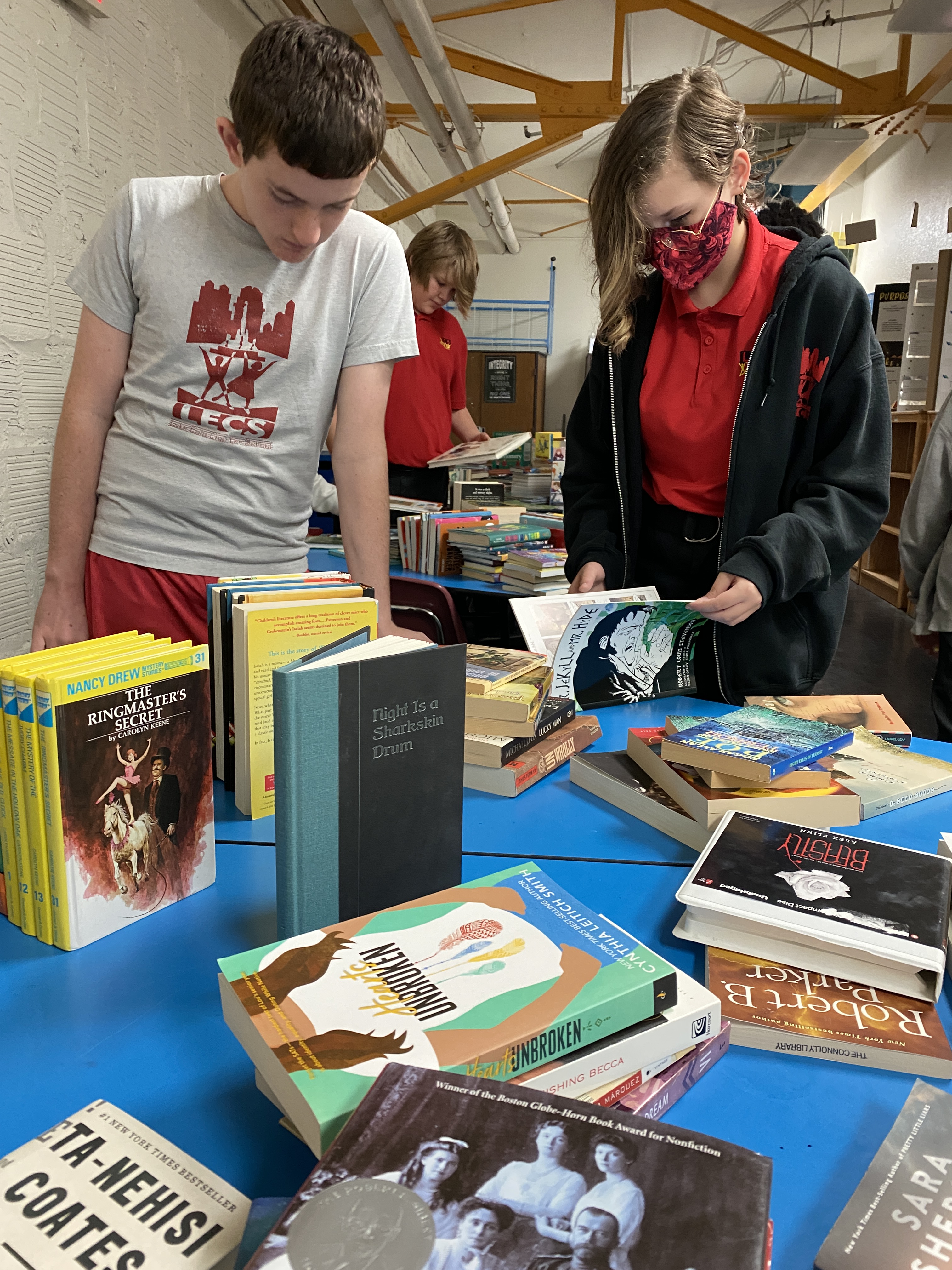
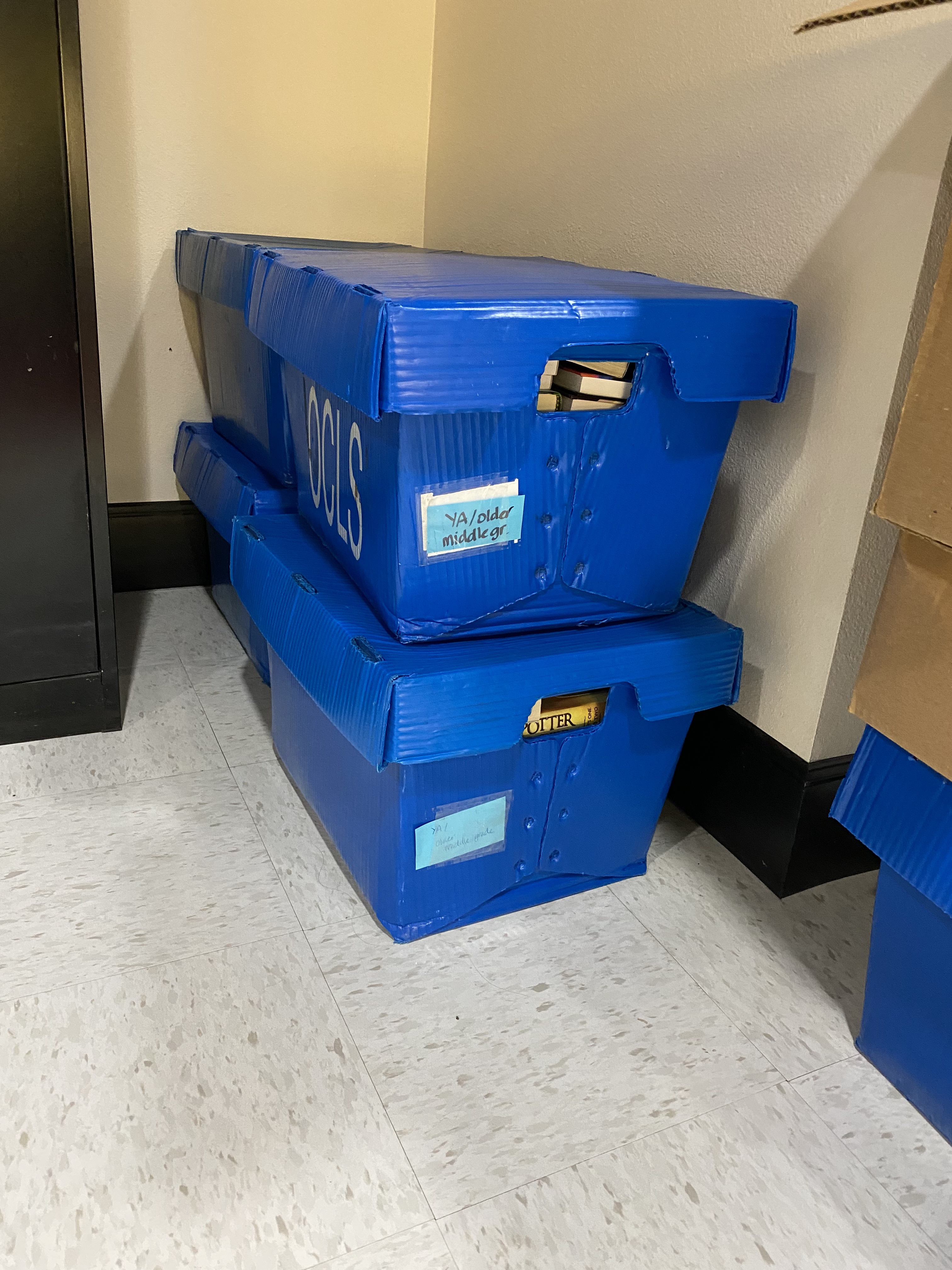
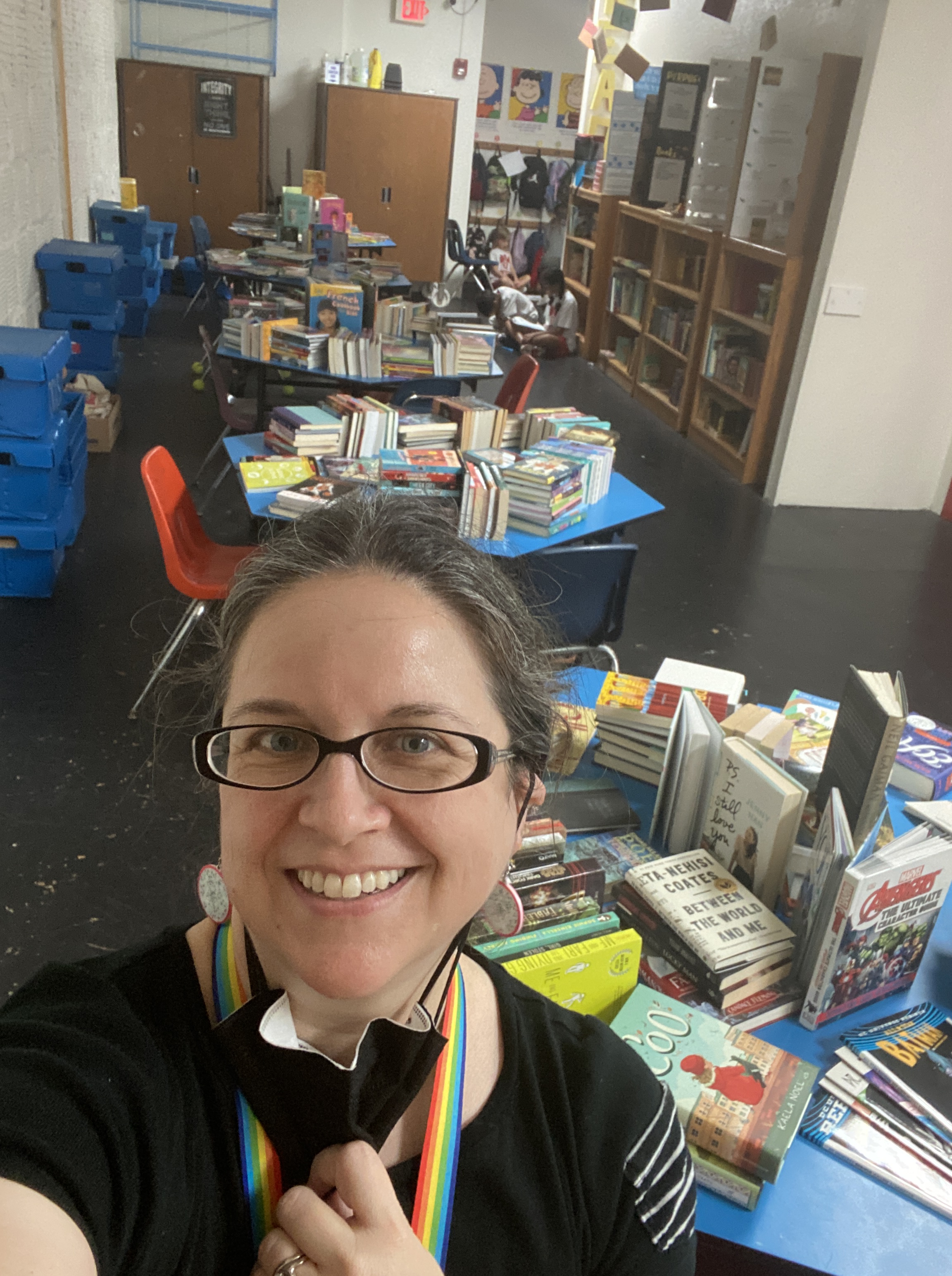
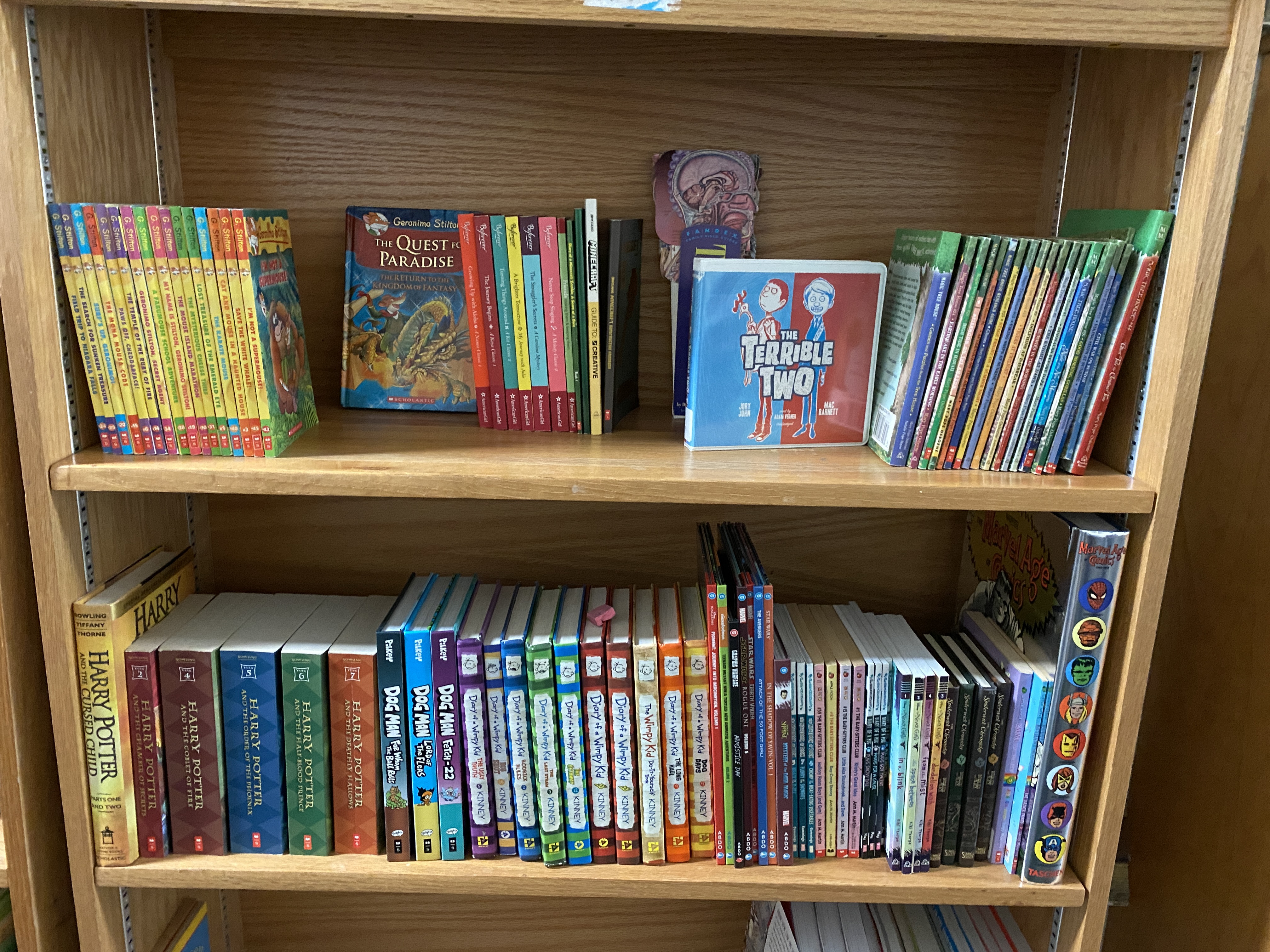
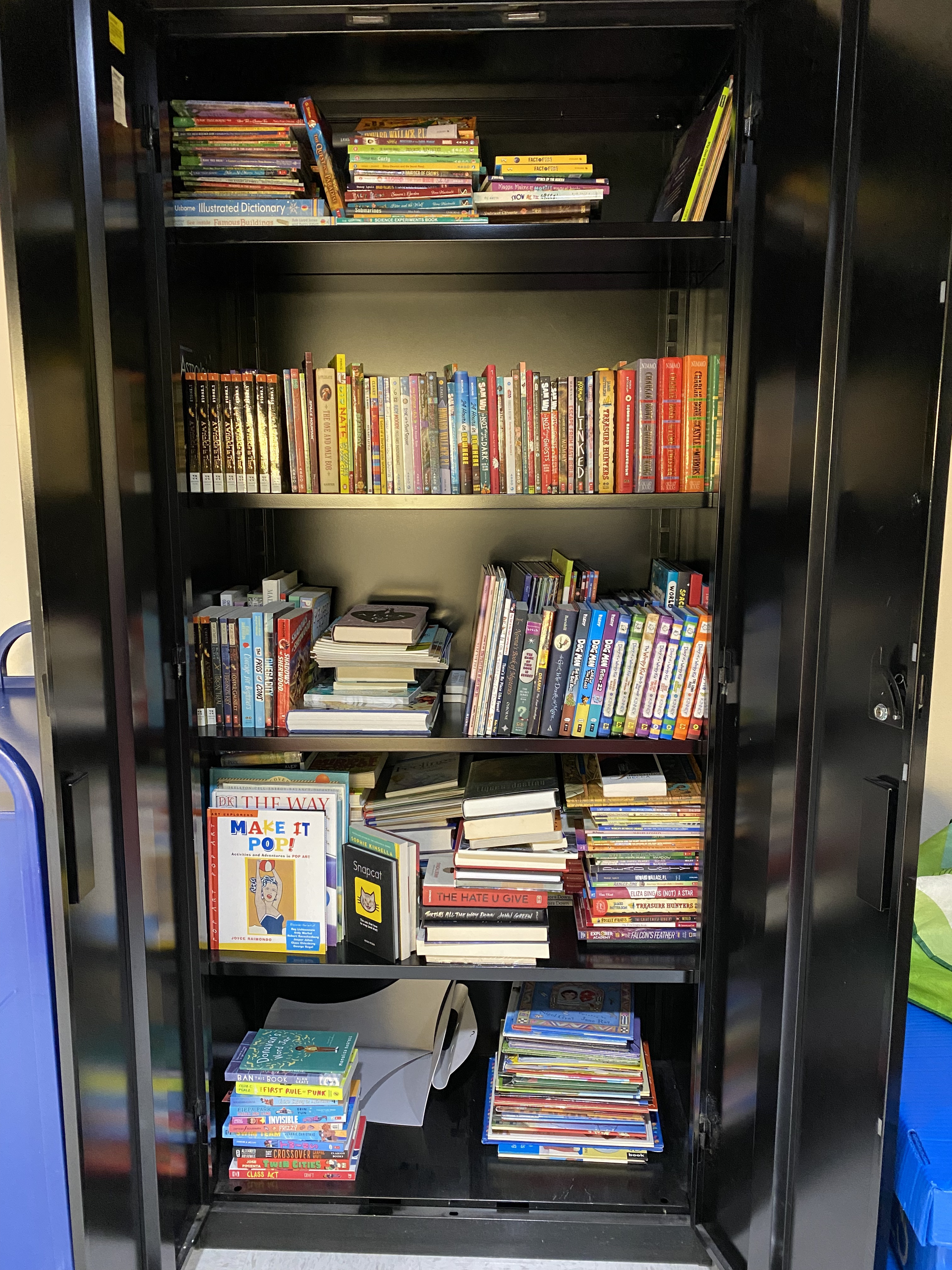
And click here for a video showing the books displayed before the kids came in to select their free books!
Orange Crate (Co-curricular Activity)– In my current role at work, I asked for the opportunity to run and adapt the program called Orange Crate, and was granted the spot. Orange Crate is a (free, but limited availability) subscription box service for kids from 3-5 years old, and the subscription runs for 4 months, with each box including books checked out from the library, information about what is happening in the library, a craft kit for them to complete, and some fun promotional items from the library. The craft kit and books center around a different theme each month. When I stepped in to this role, the box looked a bit different. Over the years I have done it, I have expanded what the Crate includes- from increasing the number of books included to making the craft kits more inclusive of the age range. I also collaborated with my manager to develop a survey to evaluate the program, and we have made adjustments based on feedback from the results. While this community engagement is indirect, it’s an important part of the way that the library meets people where they are, and meets the needs of the community at large. I am very proud to be running this program, and response has been overwhelmingly positive. While I do not have access to a recording of the presentation I made to the Board of Trustees of the Orange County Library System about Orange Crate, I can tell you that they were highly engaged and asked many excited questions about the program. Every board member was interested in the continuation and expansion of the program moving forward. Here is a link to a TikTok I made that shows me prepping/assembling the boxes before we check out the books to each patron : Orange Crate.
Leah Esguerra Interview (Co-curricular Activity)– During my first semester in this program, I chose to learn more about the topic of how views have (or have not) changed regarding unhoused people using the public library. During my research, in both print articles and in recordings from ALA conferences, the name Leah Esguerra popped up frequently. I reached out to her for an interview and while we weren’t able to connect in time for me to include her thoughts in my submitted paper, I recorded the session with her permission and we talked for 40 minutes about how views are changing and how the pandemic impacted the unhoused community in the San Francisco area. Notably, she talked about how the homeless people around her hadn’t even been fully aware of what the pandemic was when it started, what it was like building up the program in San Francisco, and how many reasons there are that people become homeless. Professional engagement in the field shown through connection and discussion with Leah about how the library supports and interacts with unhoused people and how Orlando is working towards similar goals. You can hear the interview here:
1.d. Students demonstrate leadership skills and innovation in a diverse and global environment.
BookTreats (LIS 6523- Adult Services in Libraries)– I was challenged to create an adult program for my library, and I came up with BookTreats. This program is a spin-off of an existing service (Orange Crate, featured earlier in this section) that OCLS has for preschoolers, but I adapted it for adults. This program I designed shows innovation in how we view library activities, shifting it from a usually group-based setting to something that is individually experienced in their own home. Additionally, this also showed leadership, because I did submit this to my manager at work and asked that it be reviewed for potential program creation. While it was not approved, I was recognized for the initiative and encouraged to continue to bring forth new ideas. You can read all about BookTreats below.
 Maggie Finley Portfolio
Leave a comment